Most Atlanta business websites are written for humans first. That is good. A real customer needs to understand what you do, why you are credible, and how to contact you.
The problem is that search engines and AI systems also need to understand those same facts. If your site only implies them visually, the machine has to guess.
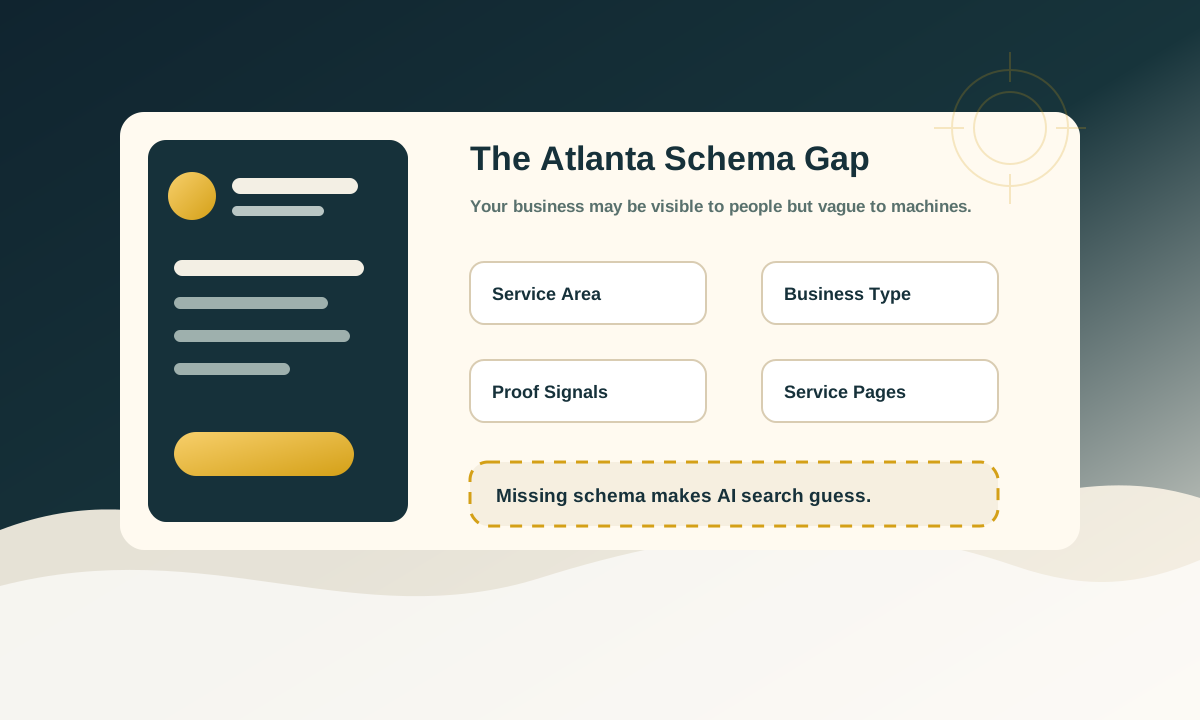
That is the Atlanta schema gap: the distance between what your website shows a person and what Google, Bing, ChatGPT search, Gemini, Perplexity, Copilot, and other answer engines can confidently parse as structured business truth.
Local businesses are not invisible because they are bad
A plumber can have great reviews. A dentist can have a loyal patient base. A remodeling company can have years of beautiful work. But if the website does not clearly connect business identity, services, service area, proof, and contact details, AI systems have less reason to use it as a source.
AI search does not only ask, "Who ranks first?" It also asks, "Which source can I understand, trust, compare, and cite?"
Short answer
Schema markup does not replace good content or real business proof. It gives search engines and AI systems a cleaner map of your business, so your visible page truth is easier to understand and reuse.
What schema actually tells machines
Schema markup is structured data placed in the page code. When it is done honestly, it translates visible page facts into a vocabulary search engines already understand.
For a local service business, that can include the business name, type, phone number, service area, opening hours, services, article topics, FAQs, and the relationship between one page and the larger site.
The key word is honestly. Schema should describe what is actually visible and true on the page. Fake reviews, invented locations, and keyword-stuffed service claims create risk instead of authority.
Why this matters more in AI search
Traditional search often pushed business owners toward keyword pages. AI search pushes the bar toward entity clarity. The machine needs to know whether you are a real local business, what you specialize in, which area you serve, and whether your site supports the answer it is about to give.
If two Atlanta companies both mention emergency plumbing, but only one has clear service pages, consistent entity details, FAQ answers, and LocalBusiness schema, that second site gives the machine a cleaner path.
What a schema-ready Atlanta site makes explicit
- business name, legal entity where relevant, phone, and contact path
- primary business category and service-specific pages
- Atlanta and surrounding service areas without doorway-page spam
- real proof: portfolio, team, reviews, certifications, or field experience
- FAQs that answer actual buyer objections
- clean internal links between services, blog articles, pricing, and contact pages
The common Atlanta pattern
Many local sites have the same problem. The homepage says "trusted local experts." The footer has a phone number. The services are buried in a paragraph. The service area appears once. The blog is generic. The schema is missing, outdated, or describes only the website, not the business.
A person can still figure it out. A machine may not. And if a machine is assembling an answer, it may choose a competitor with clearer structure.
What to fix first
Start with the pages that buyers and crawlers both need: homepage, core service pages, about page, contact page, pricing or consultation path, and your highest-value articles.
Then add schema that mirrors the truth on those pages. For most service businesses, that means LocalBusiness or a specific subtype, service information, FAQPage where justified, BlogPosting on articles, Organization or Person details where relevant, and clean canonical URLs.
Schema is not a magic ranking switch
Good schema will not rescue a slow, thin, untrustworthy website. It will not create reviews you do not have or prove expertise you do not show.
But it can remove ambiguity. And in AI search, removing ambiguity is valuable. The less a system has to infer, the easier it is to include your business accurately.
The bottom line
If your Atlanta business website has no schema, weak service structure, and vague local proof, you may be easier for people to understand than machines. That gap matters more every month.
The goal is simple: make your business obvious. Obvious to customers, obvious to Google, obvious to Bing, and obvious to the AI systems that increasingly decide which sources deserve to be cited.
FAQ
What is the Atlanta schema gap?
The Atlanta schema gap is the difference between what a local business says visually on its website and what search engines or AI systems can confidently understand as structured facts about the business, services, location, and proof.
Does schema markup make a local business rank higher by itself?
No. Schema markup is not a magic ranking switch. It helps search engines and AI systems interpret a business more accurately, which supports discoverability, rich result eligibility, and AI citation readiness when the visible page content is also strong.
Which schema should an Atlanta service business start with?
Start with truthful LocalBusiness or a relevant subtype, service information, area served, contact details, opening hours where applicable, FAQPage for real buyer questions, and BlogPosting schema for article content.
Want to Know if AI Search Understands Your Business?
We audit small business websites for schema gaps, service clarity, mobile speed, trust leaks, and AI search visibility.
Request a Website Audit